.png)
%201%20(1).png)
How Generative AI Is Changing iGaming
- Joline Liew

- Jun 5
- 5 min read
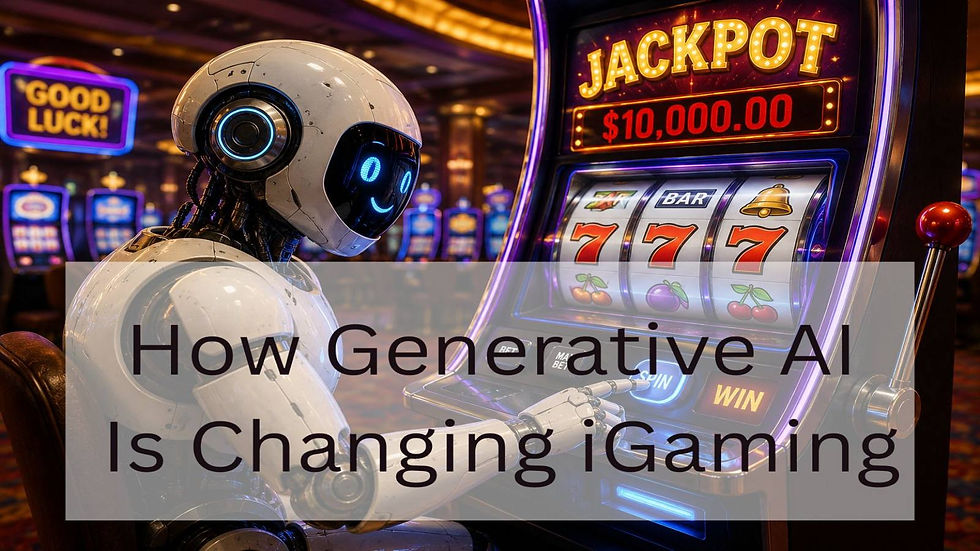
Generative AI has rapidly moved from a niche technology into one of the most discussed innovations across digital industries, including iGaming.
While artificial intelligence has been used behind the scenes for years, newer generative AI systems are capable of:
Producing text
Creating images
Generating audio
Personalizing content
Assisting customer interactions
For online casinos, sportsbooks, and gaming operators, these capabilities are creating entirely new possibilities.
For users exploring gaming environments through Winbox, understanding these trends provides insight into how online gambling experiences may evolve over the coming years.
What Is Generative AI?
Generative AI refers to artificial intelligence systems that can create new content rather than simply analyzing existing data.
Examples include:
AI chat assistants
AI-generated images
Automated content creation
Voice generation systems
Unlike traditional software that follows predefined rules, generative AI can:
Respond dynamically
Adapt to user behaviour
Create personalized outputs
This flexibility makes it particularly attractive for digital entertainment industries.
Why iGaming Companies Are Interested in AI
The iGaming industry revolves around user experience, engagement, and operational efficiency.
Generative AI offers potential improvements in areas such as:
Customer service
Game development
Responsible gambling
Fraud prevention
Marketing personalization
As competition grows, operators continuously search for technologies that improve user satisfaction while reducing operational costs.
Traditional Systems vs Generative AI
Traditional Systems | Generative AI |
Rule-based responses | Dynamic responses |
Static content | Personalized content |
Manual support processes | Automated assistance |
Limited adaptation | Continuous learning potential |
Predictable outputs | Context-aware outputs |
This difference explains why AI adoption is accelerating across digital platforms.
AI-Powered Customer Support
One of the earliest and most visible uses of generative AI in iGaming is customer support.
Modern AI assistants can help answer questions about:
Deposits
Withdrawals
Promotions
Account issues
Technical troubleshooting
Potential benefits
Faster response times
24/7 availability
Reduced support queues
More consistent answers
Human support remains important for complex situations, but AI increasingly handles routine requests efficiently.
Personalized Player Experiences
Generative AI allows platforms to create more personalized user experiences.
Examples may include:
Customized game recommendations
Personalized promotions
Tailored onboarding journeys
Adaptive content suggestions
Rather than showing identical content to every player, platforms can potentially deliver experiences based on:
Preferences
Activity patterns
Historical behaviour
This personalization is expected to become increasingly sophisticated.
AI and Responsible Gambling
One of the most promising applications of AI involves responsible gambling initiatives.
Generative AI systems may help identify:
Unusual spending patterns
Excessive session lengths
Potential signs of gambling harm
Possible interventions
Automated reminders
Spending alerts
Break suggestions
Educational content
While AI cannot replace professional support services, it may help identify potential issues earlier.
Fraud Detection and Security
Security remains a major priority across the iGaming industry.
AI systems can assist with:
Account monitoring
Identity verification
Suspicious transaction detection
Unusual login pattern analysis
Compared with traditional systems, advanced AI can often:
Process larger datasets
Identify subtle patterns
Detect anomalies faster
This may improve platform security significantly.
AI in Game Development
Generative AI is beginning to influence how casino games are designed and developed.
Potential applications include:
Concept generation
Character design
Story creation
Visual asset development
Developers can use AI tools to:
Accelerate production workflows
Explore creative concepts
Reduce repetitive design tasks
Human creativity remains central, but AI can enhance productivity.
AI-Generated Casino Content
Marketing teams are increasingly using generative AI to produce content at scale.
Examples include:
Promotional text
Email campaigns
Landing pages
Educational guides
Benefits may include:
Faster content creation
Improved personalization
Greater scalability
However, human review remains essential for:
Accuracy
Compliance
Brand consistency
Smarter Sports Betting Experiences
Sports betting platforms may benefit significantly from AI-driven personalization.
Potential uses include:
Personalized match recommendations
Customized betting insights
Educational content for beginners
Improved navigation experiences
For users exploring Winbox sports betting environments, future AI enhancements may make sportsbook interfaces more intuitive and tailored to individual preferences.
AI-Powered Language Support
Global iGaming platforms serve players across many countries and languages.
Generative AI can assist with:
Translation
Multilingual support
Localization
This allows operators to communicate more effectively with international audiences while maintaining consistent service quality.
Voice AI and Future Possibilities
Voice-based AI may become increasingly important in future gaming environments.
Potential applications include:
Voice-enabled support
Interactive tutorials
Guided onboarding experiences
Although still developing, voice interfaces could eventually create more natural interactions between players and platforms.
Potential Challenges and Risks
Generative AI also introduces challenges that operators must address carefully.
Common concerns
Incorrect information
Hallucinated responses
Data privacy issues
Regulatory compliance
Over-automation
Successful implementation requires:
Human oversight
Clear safeguards
Responsible deployment
AI should complement human expertise rather than replace it entirely.
AI and Player Trust
Trust remains one of the most important factors in online gambling.
Players generally expect:
Fair gameplay
Transparent communication
Secure transactions
As AI becomes more visible, operators will need to ensure:
Transparency
Accuracy
Ethical usage
Maintaining player confidence will remain essential.
What the Future Might Look Like
The next decade could bring major AI-driven changes across the iGaming industry.
Potential developments include:
Highly personalized gaming experiences
Smarter responsible gambling tools
Advanced fraud detection systems
AI-assisted game design
More intelligent customer support
Many of these technologies are already being tested today.
The pace of innovation will likely accelerate further over the next several years.
Why Human Judgment Still Matters
Despite its capabilities, AI is not a replacement for human judgment.
Areas where human oversight remains important include:
Customer dispute resolution
Regulatory compliance
Responsible gambling decisions
Strategic business planning
The most effective future systems will likely combine:
Human expertise
AI efficiency
rather than relying entirely on either one.
How This Relates to Winbox Users
For users exploring gaming environments through Winbox or navigating platforms connected to Winbox login systems, AI-driven innovation may gradually influence everything from customer support to personalized recommendations.
Future improvements may include:
Faster assistance
More relevant content
Better security features
Enhanced user experiences
Many of these changes are already beginning to appear across the broader iGaming industry.
Conclusion
Generative AI is rapidly becoming one of the most influential technologies shaping the future of iGaming.
Its potential applications include:
Customer support
Responsible gambling
Fraud prevention
Content creation
Personalization
Game development
While challenges remain, AI is likely to play an increasingly important role in how online casinos and sportsbooks operate.
For users navigating Winbox login environments or exploring digital gaming platforms more broadly, understanding these developments provides valuable insight into where the industry may be heading over the next decade.
Frequently Asked Questions
What Is Generative AI?
Generative AI is artificial intelligence that can create new content such as text, images, audio, or responses.
How Is AI Used in Online Casinos?
AI is used for customer support, fraud detection, personalization, responsible gambling tools, and content generation.
Can AI Improve Responsible Gambling?
Yes. AI can help identify unusual behaviour patterns and provide alerts or educational interventions.
Will AI Replace Human Customer Support?
Not completely. AI can handle routine questions, but human agents remain important for complex issues.
Is AI Used in Sports Betting?
Yes. AI can support personalized recommendations, betting insights, and improved user experiences.
What Is the Biggest Benefit of AI in iGaming?
One of the biggest benefits is the ability to provide more personalized, efficient, and scalable user experiences.


Comments